Born in Singapore to parents of mixed Asian heritage and growing up between Australia, Malaysia, China and Indonesia, Rosheen Kaul has a world of flavour memories and culinary influences to draw on. Etta, the Melbourne restaurant she helmed until 2024, earned recognition for its globally inspired and vibrantly creative menu. Her first cookbook, Chinese-ish, co-authored with a friend, won a James Beard Award.
Kaul’s new cookbook is based on the sauces developed at Etta. The book is divided into sections broken down by colour: Red (sambals and spicy chilli oils); Green (fresh herb-based sauces); White & Beige (cream sauces and riffs on mayonnaise); Black & Brown (soy sauces and dark vinegars); Yellow & Orange (compound butters and butter-based sauces). The design of the book – with vibrant colours and artistic food styling — is gorgeous. (Unfortunately, the publisher did not respond to requests for permission to reproduce images, so the photos you see here are mine).
Each sauce recipe is followed by one or two recipes demonstrating its uses. There are also useful guides “the best sauces to accompany…” (red meat; pasta; poultry; fish, etc) and “Saucy dishes to make when you’re…” (having a party; dining solo; in a grilling mood; etc) that show how these ‘umami bombs’ can be incorporated into everyday cooking.
Red Sauces
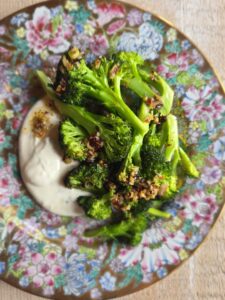
Everything Bagel Chilli Oil, made with the eponymous seasoning blend, Korean chilli flakes, spring onion and garlic, sizzled in smoking hot oil, was delicious and the accompanying recipe Grilled Broccolini with Everything Bagel Chilli Oil (I used broccoli) was also fantastic. This was a very simple sauce to prepare and with a jar of Everything Bagel Seasoning in your pantry can be whipped up at a moment’s notice. It would kick up the flavour of almost anything.
Curry Leaf Chilli Oil caused a bit of head scratching. The photo shows a darkly red sauce liberally laced with whole curry leaves but the recipe calls for just a half teaspoon of chopped leaves. I followed the photo and added a handful of leaves. The suggested recipe, Folded Eggs with Curry Leaf Chilli Oil, (delicious!) relies on the curry leaves for flavour so I was happy I’d used plenty.
Green Sauces
Basil and Green Chilli Sambal is a fresh blend of chillies, Asian shallots and tomatoes, with two kinds of basil (Thai and Italian) and “big salsa energy” according to Kaul. It reminded me of fresh Mexican salsas. Stirred through a bowl of tomato wedges and canned tuna, it made the simple but zesty Tuna Tomato Salad with Basil and Green Chilli Sambal.
Ginger Spring Onion Sauce is a simple condiment made with the hot oil technique. The accompanying recipe Pork and Prawn “Wontons” with Ginger Spring Onion Sauce treats the wonton skins and meatball filling as separate components. The pleasing mouthfeel of slippery wontons and springy meatballs is there but without the bother of making dumplings. This sauce lasts for at least a week in the fridge and is a useful flavour addition to things like fried rice and sautéed vegetables.
White & Beige
Sesame Garlic Sauce is similar to Japanese goma dare, but with the addition of Chinkiang black vinegar. This adds a deep umami note, but two tablespoons overwhelmed the sweet notes of sesame and gave the sauce an unpleasant aftertaste. Stirring in some sweet mirin brought the flavour back in balance but I’d suggest reducing the black vinegar to a single tablespoon. The sauce is key to “Bang Bang” Roast Chicken Salad with Sesame Garlic Sauce — a great way to use up leftover or rotisserie chicken.

Charred Green Chilli Gribiche was a standout. The classic French sauce gets a spicy kick from green chilli that’s blackened over an open flame or in a cast iron pan. There is no instruction to scrape off the burned skin, but since there are no black flecks in the photo of the finished sauce, I did. Seared Salmon with Charred Green Chilli Gribiche was also superb. A crispy-skinned salmon fillet is served with the gribiche and a little salad of red onion and green olives that beautifully offset the richness of the salmon and its sauce.
Black and Brown
Ultimate Dumpling Sauce is an all-purpose condiment that has many uses beyond a dip for dumplings. Made with red and green chillies, sesame oil, soy sauce and other ingredients, it is deeply complex and spicy. Kaul layers it with creamy Cumin Buttermilk Ranch (I used bottled Ranch) sauce to great effect in Dumpling Salad with the Ultimate Dumpling Sauce. Store-bought dumplings (fried or steamed, or boiled) are served on a salad of crisp vegetables and tomatoes, dressed with the two sauces — a lovely contrast of temperature, taste and textures.
Hot Oil Dressing is a multi-purpose condiment combining an infused soy sauce with a hot oil blend. It produced one of the most spectacular recipes in the book. Wombok Cabbage “Flower” with Hot Oil Dressing is a bit of a craft project but fun to make. The brassica we know as Napa cabbage is tied with kitchen twine and cut into ‘steaks.’ These are blistered in a searing hot cast iron pan, and finish cooking in the oven. When the strings are removed, the cabbage fans out like the petals of a rose. It is plated with a smear of Garlic Sesame Sauce and topped with the hot oil dressing. It looks stunning and taste scrumptious — a showstopping dish to serve to vegetarian guests.
Yellow and Orange.
Comfort food is the calling card of the final butter-based chapter. Cheese and Bacon Sauce, enriched with cheese, bacon fat and crispy bacon bits, was as decadent as it sounds and played very well in Kimchi Potato Skins with Cheese and Bacon Sauce. The cup of sauce called for was more than double the amount needed to fill the potato skins to overflowing. Not a deal breaker but I did wonder how thoroughly the recipe (and some others) were tested.
The two compound butters I tried were both excellent. “Café de Rosheen” Butter – a signature Kaul recipe that includes no fewer than 14 ingredients (pink and black peppercorns, lemongrass, curry powder, fish sauce and more) — is loaded with complex flavours. With a cache of this butter in the freezer you can turn any weeknight dinner into something special. Kaul offers a recipe for a Chicken Schnitzel topped with the butter but I put it on a pan-seared pork chop and tossed it through steamed green beans — both enhanced greatly by this boldly flavoured condiment.
I loved Kalamata and Chinese Olive Butter. Despite living in Asia for many years, I had never heard of Chinese Olive Vegetable. I’m still not quite sure what it is, but it is tasty! Combining it with kalamata olives, garlic and lemon zest is a testament to Kaul’s talent for thinking outside the box. Smashed Baby Potatoes with Kalamata and Chinese Olive Butter were swoon-worthy. And on sourdough toast with a poached egg – wow!

There is no doubt that Secret Sauce is packed with the good stuff. Kaul has a singular palate and a genius for pairing ingredients and layering flavours in unusual ways. It’s a fun and inspiring book to cook from. I do have one quibble. The majority of sauces and condiments are designed to be used fresh or have a limited shelf life, so yields are typically small — one or two cups. It’s clear that the recipes have been scaled down from restaurant quantities (Kaul says she makes her signature chilli oil in five-gallon batches!) but just putting a recipe through a batching software isn’t enough. Half a teaspoon of water or parsley, for example, are imperceptible additions to a boldly flavoured sauce. Some recipes have yields that don’t make sense (300 grams of Smashed Baby Potatoes serves a cup? A Seafood Tower with a kilo and half of shellfish plus a dozen oysters serves 1 ½ cups?) While these errors won’t ruin a recipe, they could have been avoided with more diligent copyediting and recipe testing.
But don’t let that put you off. Secret Sauce is the bomb. A secret weapon for lovers of big flavour. A key to worlds of deliciousness. And if you pay attention to the professional tips and techniques Kaul weaves in throughout, it is a book that will make you a better cook.