India is intense — crowded, hot, stinky, noisy, colourful, spiritual, beautiful, ugly, rich, poor, riotous, serene. It’s a chaotic country with a population of one and a half billion. And all those people eat – at home, at work, and on the street – some of the best food in the world.
I’ve been to India. I’ve also lived in Singapore, whose Little India neighbourhood possesses all the colour, sounds and aromas of Mumbai, except that street food vendors are gathered together in hawker markets and there are no cows wandering in the streets. My mouth waters just thinking about the food there.
Its no surprise that Meherwan Irani, founder of the restaurants Chai Pani and Botiwalla, missed the bold, spicy foods he grew up with in India when he moved to America for college. But it wasn’t until his forties, after a motley career, that he found his true calling — a mission to introduce American diners to the splendiferous world of Indian street food.
Irani, who is of Parsi descent, opened the first Chai Pani restaurant in 2006 in Asheville, North Carolina. A second location in Decatur, Georgia, followed in 2013. Deep within the conservative culinary landscape of the American South, neither location sounds like a good place to start a culinary revolution. But Irani’s vision panned out. By 2021 The New York Times was listing Chai Pani among the 50 most exciting restaurants in the county and the following year The James Beard Foundation named Chai Pani Asheville an “Outstanding Restaurant.” Critics highlighted its focus on Indian street food and regional home-style cooking, offering American diners a different perspective on Indian cuisine. Botiwalla, a more casual restaurant concept inspired by the Irani cafés and kebab houses of India, has received similar acclaim.
But how does this success translate to a cookbook? Can those of us who haven’t had the opportunity to visit Irani’s restaurants create some of the magic at home?
Yes we can!
After the front matter Please Allow me to Introduce Myself and How to Cook from this Book, are nine chapters: Chaat; Sandwiches & Rolls; Cafes, Canteens & Chinese Food; Sigri (Grill); Ghar Ka Khana (Home Cooking); Big Ticket; Desserts & Sweet Meats; Drinks; Pantry. The graphic design is cheeky, colourful and dynamic, with candid photos and Bollywood-inspired illustrations that capture the spirit of India’s kaleidoscopic street culture.
Irani wants you to cook this food at home and the majority of his 100 recipes call for ingredients available in a regular supermarket. Foundational ingredients – ginger, garlic, onions, cilantro, tomatoes, and spices like mustard seed, turmeric and cumin — appear in multiple recipes, so once you’ve kitted up with the essentials you can pretty much cook your way through the whole book. The only items I had to seek out in a specialty store were whole urad (for Makhani Dal), Sev (chickpea noodles, to garnish Famous Desi Salad) and frozen coconut (for Coconut Chutney). Irani also urges us to embrace jugaad, the can-do attitude and spirit of improvisation that make Indian street vendors masters of overcoming everyday obstacles. “Absolutely do not let the lack of a certain ingredient or piece of equipment prevent you from cooking something that calls to you,” Irani writes. “Don’t be afraid to go off script.”
I hewed closely to script for the purpose of this review and started cooking with Aloo Tikki. These crunchy little spiced potato patties are tasty enough to serve of on their own but spectacular when topped with the garnishes that turn them into aloo tikki chaat – tamarind chutney, mint chutney, sweet yogurt sauce, red onions, cilantro and chaat masala spice blend. The combination of contrasting flavours and textures is fabulous — a fiesta on the palate.
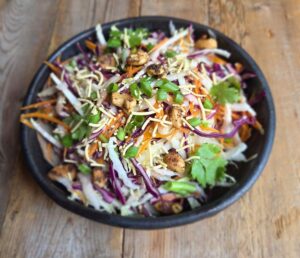
Famous Desi Salad – a crisp, refreshing Indian-style salad tossed with bright herbs, spices and freshvegetables — is another chaat that succeeds by layering flavours and textures. A simple mix of shredded cabbage, carrot, cilantro and green onion gets a zippy cumin-lime dressing and a garnish of sev, sesame seeds and spiced cashews. Inspired by Irani’s American wife Molly, who insisted he must offer a salad in his restaurants, it has become a best seller. If you can’t find sev, you could use fried chow mein noodles or another crunchy garnish (Irani says Parsis use potato sticks on all kinds of dishes) but please make the masala cashews – they are addictively delicious.
It soon becomes clear that the Pantry chapter is this cookbook’s secret weapon, with recipes for chutneys, sauces, pastes and masalas that are building blocks or finishing touches for many other recipes. These condiments, Irani writes “have a huge payoff in terms of adding flavour and texture to your Indian home cooking.” They do.
From Sandwiches & Rolls I made the odd-sounding but surprisingly good Mint Chutney & Butter Sandwich combining thickly buttered soft white bread with vibrantly herbaceous mint chutney. Irani explains that the tradition of afternoon tea with finger sandwiches reflects the Parsis’ close association with the British during the colonial period. “What’s a Parsi” is one of several short essays interspersed throughout the book that evidence Irani’s love of research. Not many cookbooks included a bibliography but Irani’s discussion of topics like chai, curry, chilies, and naan are well informed and will please cooks curious about the context and provenance of ingredients and recipes.
Akuri is a dish from the Irani Cafes subsection of Cafes, Canteens & Chinese Food. Spiced, softly scrambled eggs are a Parsi classic, we learn. Irani gives very detailed instructions on how to achieve the eggs’ perfect custardy texture. All the recipes in No, 1 Best Indian are similarly detailed in method, making it very difficult to mess things up – a bonus for cooks who feel nervous about tackling an unfamiliar cuisine.
Kheema Pav — another Parsi dish – consists of rich, spiced ground meat served with buttered bread rolls (pav). Irani calls it Sloppy Jai — India’s answer to a sloppy joe. It’s an easy dish to love but messy to eat in the squishy buns. Summoning jugaad, I made the kheema again and topped it with mashed potato. It makes a brilliant Shepherd’s Pie (Pai?).
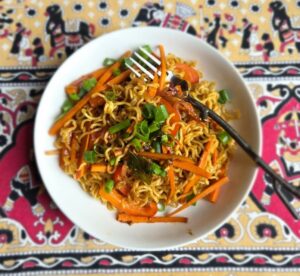
Roadside Hakka Noodles (Chinese Food) were cause for alarm. This easy upgrade for instant noodles, with vegetables and Indo-Chinese seasonings, calls for both fresh green chilli and chile-garlic sauce, resulting in a dish so fiery that my tasters were left mopping brows and gasping. There is no way of knowing how hot a fresh (or dried) chile pepper will be until you bite into it. As chiles (sp. chillies in India) appear in recipes throughout No 1 Best Indian, to avoid a flame-out I’d counsel tasting as you go.
Pav Bhaji – a buttery mashed vegetable curry served with bread rolls — is a Mumbai classic and standard fare in canteens and roadside truck stops (dhabas). This vegetarian dish was a favourite of mine and was enthusiastically devoured, even by my carnivore tasters.
Arangaon Truck Stop Chicken, inspired by the hearty food served at dhabas, is robust and spicy but my effort turned out with the consistency of a chicken stew that didn’t look much like the photo showing chicken pieces coated in a thick spicy paste. I was similarly perplexed by the photo of Pork Vindaloo — a tangy, fiery pork curry cooked in vinegar, garlic and spices – that is a signature dish of the former Portuguese colony of Goa. Irani says this dish is “on the drier side” but even after bubbling away for several hours my vindaloo gravy was thin. It tasted great – and even better the next day – but there is only so much that can be conveyed in a written recipe and these are two dishes I wish I could learn to cook alongside Irani.
A note about photos – the ones you see here are mine, showing how the recipes turned out in my home kitchen. The photographs in the book are gorgeously styled with colourful tableware and props, adding much to the book’s unique appeal.
Dal Makhani – creamy slow-cooked black lentils and beans enriched with butter and spices — is a another classic of Indian cuisine and a culinary showstopper. Irani’s recipe yielded a gorgeously rich and boldly flavoured dish. I was excited to see that he included the option of infusing the lentils with smoke using the dunghar technique that I saw being used in India. This final step lifts the dish to another level. All you need is a piece of charcoal and a kitchen blowtorch to create some genuine culinary magic.
The grilling chapter (Sigri) is where you’ll find Tandoori dishes (chicken, lamb, salmon) adapted for the home oven, as well as spiced-rubbed Masala Pork Chops, and Seekh Kebabs. The chops were a breeze to cook and delicious but the kebabs had me scratching my head. The recipe calls for three pounds of lamb (or beef) which is divided into “six equal-sized balls, each slightly larger than a golf ball.” Half a pound of ground meat yields something waaay bigger — more like a baseball. The kebabs turned out nicely but since a golf ball-sized lump of meat weighs less than two ounces, there’s something wrong with the math in this recipe. Jugaad and you’ll ace it.
My Grandma’s Dal (from Home Cooking) is a comforting lentil dish that’s a staple of India’s significant vegetarian population. The simple dal is kicked up with a tadka, a mix of spices and aromatics sizzled in oil and stirred into the lentils after cooking. I also made Mom’s Quick ’n’ Easy Potatoes – fast, flavourful potatoes tossed with spices. This is an easy everyday side that would pair just as well with Western dishes.
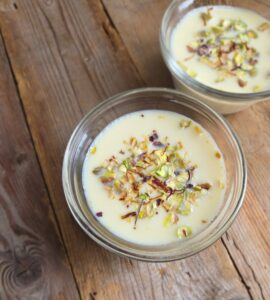
I finished with sweet notes – a heavenly Mango Lassi and the and dreamily flavoured Bhapa Dhoi – a creamy dessert topped with saffron and crushed pistachios.
Just look at the outrageously bold cover of the No. 1 Best Indian Cookbook in the World and the enthusiastic pages that follow and you may ask – is this hubris? Or is it a gateway to a riotous, colourful, spicy world of deliciousness? Thank you, Mr Irani – it is most certainly the latter.
Recipes excerpted for the purpose of review, from No. 1 Best Indian Cookbook in the World: At-Home Recipes from the Streets, Truck Stops, Villages, and Palaces of India At-Home Recipes from the Streets, Truck Stops, Villages, and Palaces of India
By Meherwan Irani with Jamie Feldmar (Ten Speed Press, 2026). Modified slightly for style. Photographs are reviewer’s own.